The Abilene Paradox: Why Teams Agree in Meetings but Fail to Execute
The Abilene Paradox explains why teams agree in meetings but fail in the field. The cure is not more dialogue; it is the True North "First Action Protocol," which uses kinetic action to shatter the illusion of alignment and force immediate execution.
TRUE NORTH
Bryan Cassady
2/5/20263 min read


The Abilene Paradox: Why Teams Agree in Meetings but Fail to Execute
The reason teams agree in the boardroom but fail in the field is not a lack of trust; it is a lack of kinetic proof. This is the "False Consensus Effect." We solve this using the True North "First Action Protocol," which replaces verbal agreement with immediate physical action to shatter the illusion of alignment.
Most leaders leave meetings with a "green dashboard," assuming that silence means agreement. Three weeks later, nothing has moved. In social psychology, this is known as the Abilene Paradox (or the False Consensus Effect).
The Anchor Reference:
"Management expert Jerry B. Harvey defined the Abilene Paradox as a phenomenon where groups take actions that nobody actually wants to take, simply because they wrongly assume everyone else wants to. While Amy Edmondson’s research on 'Psychological Safety' suggests the cure is more dialogue, our data shows that in high-velocity markets, dialogue is too slow. You don't need more talk; you need a kinetic test for truth."
The Core Problem
To destroy false consensus, we adapt the military principle of Commander’s Intent. As noted in the True North System, when soldiers don't know what to do, people die. In business, projects die.
We replace vague mission statements with a "True North" alignment that forces clarity in three steps:
Truly Simple (The Headline): Create a headline that is suggestive of the mission. It must be short, memorable, and strip away jargon.
Narrative (The Why): The story should be so clear that people understand why we want to get started. It must provide enough context for them to get the "how" right without constant supervision.
Objectives (The Goal): Finish the sentence with one clear mission: "We need ideas for…" This defines the ultimate destination.
Restrictions (The No): Explain what you do NOT want. Defining boundaries is often more critical than defining the goal itself, as it prevents wasted effort on the wrong path.
Tactical Constraints (The Limits): Define your key constraints in terms of time, resources, investment, regulations, and people. This forces the team to operate within reality.
Here are Places to Start (The Resources): Identify areas to look for ideas to accomplish the mission, including any relevant live project work. These are not comprehensive plans, but sparks to trigger immediate action.
The Solution: Commander’s Intent
Comparative Analysis:
Standard vs True North
Most leaders try to solve the Abilene Paradox (False Consensus) using one of two general methods: Bureaucracy (more rules) or Psychology (more feelings). Both fail to generate speed.
True North succeeds because it ignores "agreement" and demands "alignment" through action.
A major American fast-food chain faced the challenge of standing out in a crowded market. Their official mission statement was to "deliver superior quality products and services for our customers and communities through leadership, innovation, and partnerships." Ask yourself: if you were a local store manager or a product developer, would you know what to do next based on that statement?
Instead, they used the True North framework to create actionable clarity. Their "Truly Simple" headline became "Healthy Fast Food." The narrative focused on giving Americans a healthier choice when looking for a quick meal. The objective was to create "better and healthy food that consumers notice is healthier and better and will be something they talk about." Critically, the restrictions included not being labeled as "health food" (which can deter customers) and maintaining existing profit margins.
With which version would people know better what to do next? The True North canvas gave every team, from product development to local store management, a precise direction to execute against, replacing corporate platitudes with mission-critical clarity.
Real-World Application
Frequently asked questions
How long does a True North alignment session typically take?
A True North session is designed for speed and typically helps teams achieve actionable alignment in 30–60 minutes.
How do you know if you've created an effective True North canvas?
The ultimate test is action-oriented clarity. The most important question to ask is: "if you gave your true north to someone, would they know what to do next without asking?" If the answer is yes, you are ready to proceed.
Bring True North to Your Team
The Abilene Paradox is expensive. You cannot solve it with an email. You must install a new operating system for execution.
Bryan Cassidy executes this alignment live. As a keynote and corporate speaker, he forces teams to confront the "Execution Gap" using the True North framework. He turns passive agreement into kinetic proof.
Do not let your next strategy session end in false consensus. Ensure your team leaves with a First Action.
About Bryan
Prof. Bryan Cassady is a top AI keynote speaker who helps organizations turn AI hype into measurable impact. Author of The Generative Organization and CYCLES, he specializes in Humans+AI frameworks. Bryan delivers high-energy keynotes and workshops augmented by 356 proprietary AI tools, helping teams transform learning into lasting habits and execute concrete AI solutions in just 90 days.
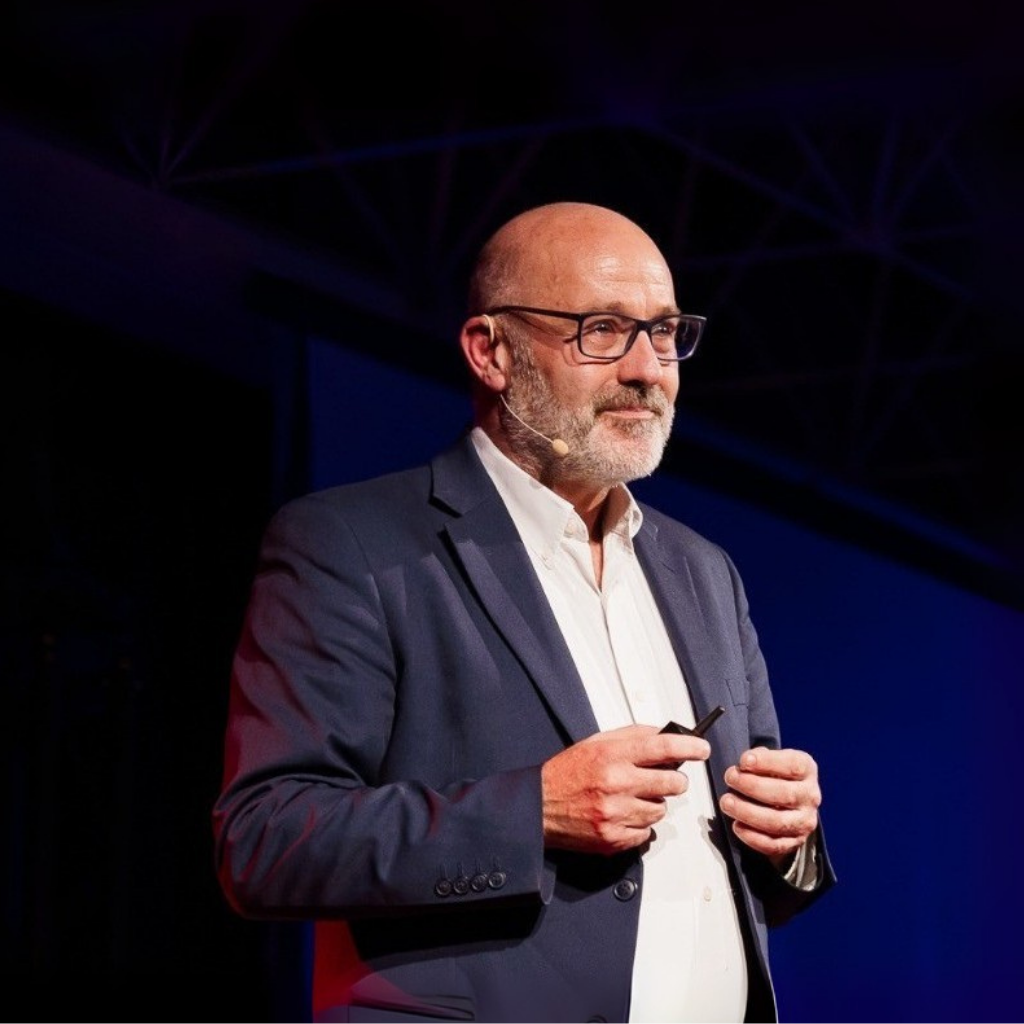

Bryan Cassady
+32 475 86 07 57
bryanc@bryancassady.com
© 2025. bryancassady.com. All rights reserved.
Meet with Bryan for a 1-1:
Bryan Cassady is an AI keynote speaker, author of CYCLES, and founder of GenOrg, helping enterprises turn AI hype into measurable execution.