
The 1% Problem With Business Books. How AI Turns Ideas Into Action
Most business books fail at application, not awareness. Even top-selling business books typically result in meaningful use by only about 1% of readers. According to Bryan Cassady, this is not an attention problem but a design failure rooted in linear reading models that do not match modern work. Artificial intelligence exposes this gap and enables a different approach. This article explains the problem, the data behind it, and an AI-augmented model designed to increase real-world usage by orders of magnitude.
Bryan Cassady
2/5/20264 min read
The Core Claim. The 1% Usage Gap
Business books are widely distributed and culturally visible. They appear in airport bookstores, executive offices, leadership programs, and conference swag bags. Sales numbers, rankings, and reviews suggest success.
Yet usage tells a different story.
Even at the top end of the market, a business book that sells around 15,000 copies, already considered a strong performance, typically results in meaningful application by roughly 1% of readers. Most ideas never make the transition from page to practice.
This is not a marginal problem. It is the central failure mode of the category.
Traditional publishing optimizes for visibility. It does not optimize for use.
Why Business Books Fail at Use
Linear Reading in a Non-Linear Work Reality
Most business books are designed for linear, front-to-back reading. They assume uninterrupted time, individual focus, and reliable memory. These assumptions rarely hold.
Modern work is fragmented, collaborative, and constrained. Decisions are made in short windows, often with incomplete information and competing priorities.
The result is predictable. Ideas are consumed, but not integrated.
The Drop-Off Happens at Use
The largest loss does not occur at purchase. It does not even occur at reading. It happens at the point of application.
Readers understand the concepts. They agree with the arguments. Then real work intervenes. The book is closed, and the idea dissolves.
This is a design failure, not a motivation problem.
AI Changes the Job of the Business Book
Artificial intelligence does not replace business books. It changes what they are for.
When people work with AI, they do not read books sequentially. They query them. They extract relevant ideas. They test concepts against real constraints. They translate abstractions into concrete plans in the middle of actual work.
In this context, a business book stops being a narrative artifact. It becomes infrastructure.
A reference system.
A thinking tool.
A decision aid.
The value shifts from reading to using.
The AI-Augmented Business Book Model
To test this shift, Cassady stopped optimizing for bestseller rankings and launched an experiment focused on usage and impact rather than sales.
The model has four core components:
Free PDF editions designed to work with AI tools
Paid ebook and print editions for depth and longevity
Book content embedded into AI systems that translate ideas into concrete outputs
Success measured by observable use, not copies sold
The objective is straightforward. Increase real-world application by orders of magnitude.
Early results suggest that this approach can generate nearly 200 times more applied impact than the traditional book-as-product model.
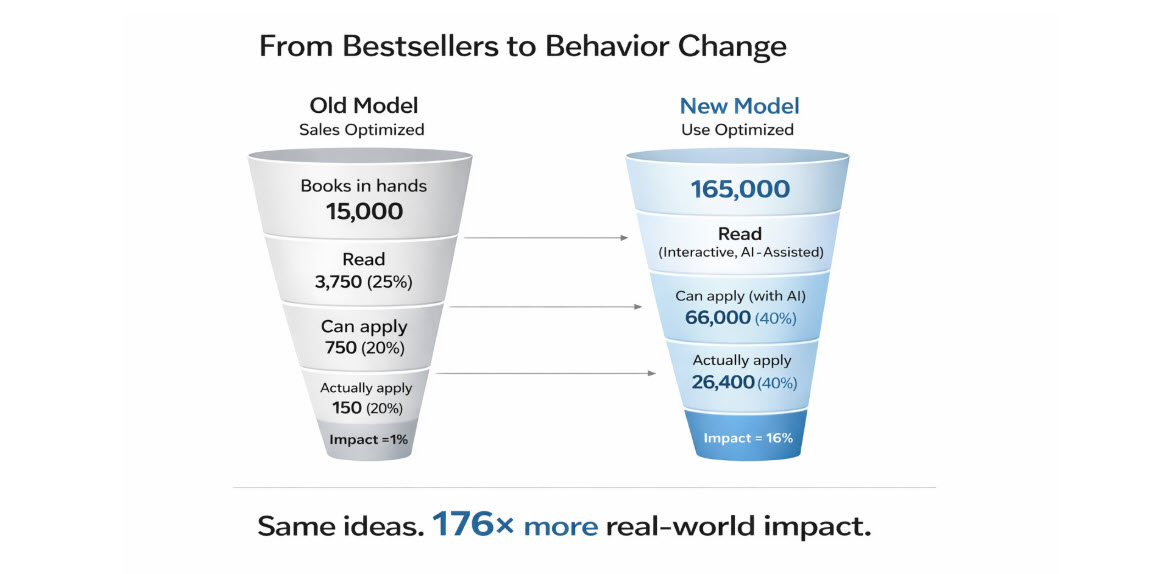
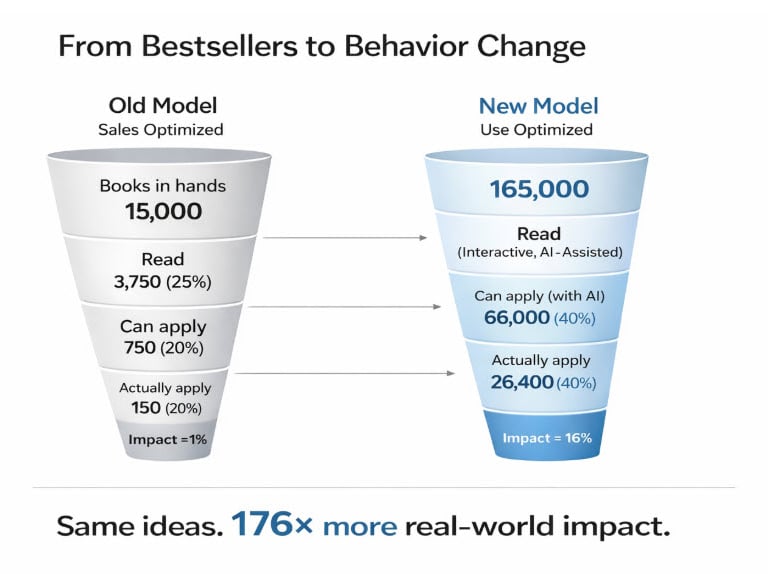
From Visibility to Usage. A Shift in the Value Metric
As AI drives the cost of distribution toward zero, the value of a business book moves elsewhere.
Visibility becomes easy. Application becomes scarce.
In this environment, free access does not devalue expertise. It exposes it.
When ideas are free but usage is visible, weak thinking collapses quickly. Strong frameworks spread because they help people do real work under real constraints.
The book is no longer the product. Impact is the product.
Implications for the Future of Business Books
For Authors
The primary metric shifts from sales to use. Influence is measured by decisions changed and behaviors adopted, not units sold.
For Publishers
Business books begin to function like open systems. Free at the core, modular, AI-queryable, and supported by print, services, and deeper engagement.
For Readers
Books become tools integrated into work, not content to finish. The question changes from “Have I read this?” to “Did this help me decide or act?”
The Choice Facing Business Books
AI did not create the execution gap. It made it impossible to ignore.
Business books now face a simple choice.
Be read. Or be used.
About Bryan
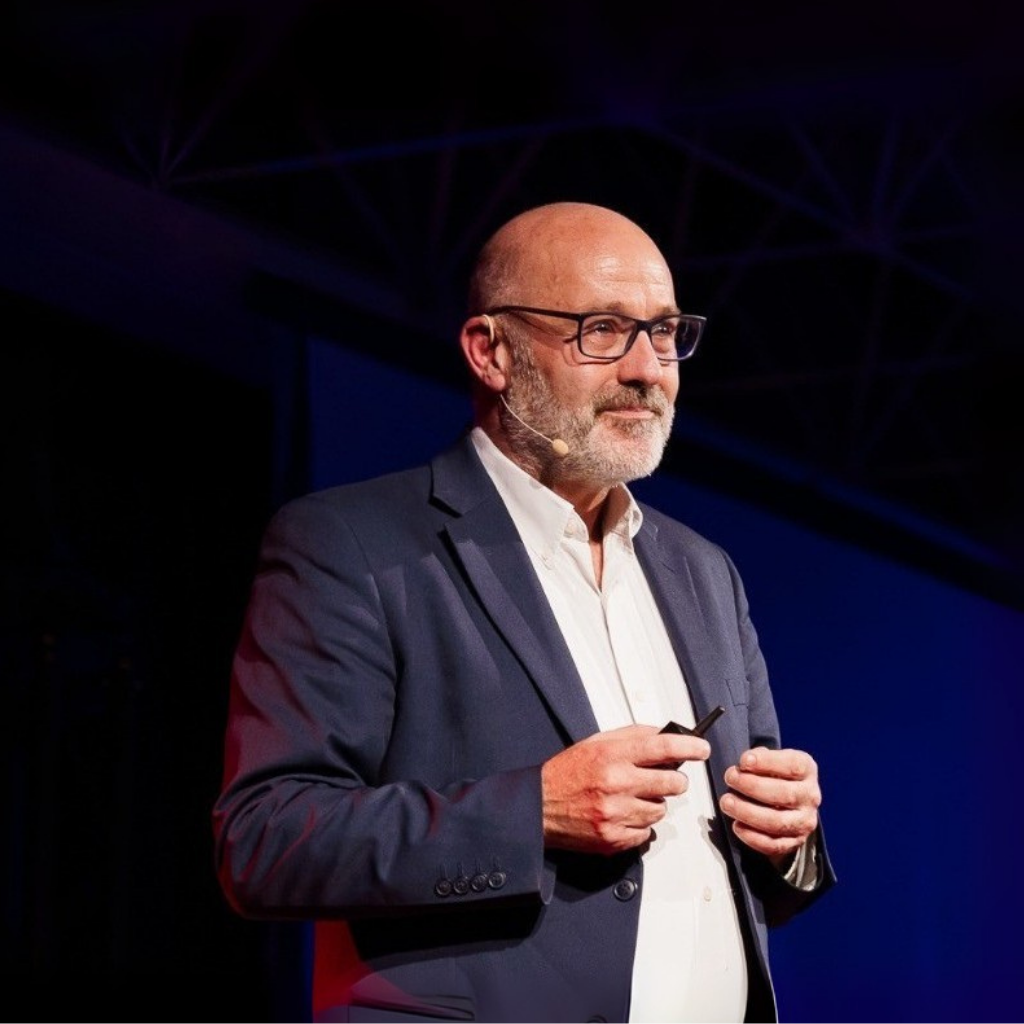
Prof. Bryan Cassady is a top AI keynote speaker who helps organizations turn AI hype into measurable impact. Author of The Generative Organization and CYCLES, he specializes in Humans+AI frameworks. Bryan delivers high-energy keynotes and workshops augmented by 356 proprietary AI tools, helping teams transform learning into lasting habits and execute concrete AI solutions in just 90 days.
Access and Resources
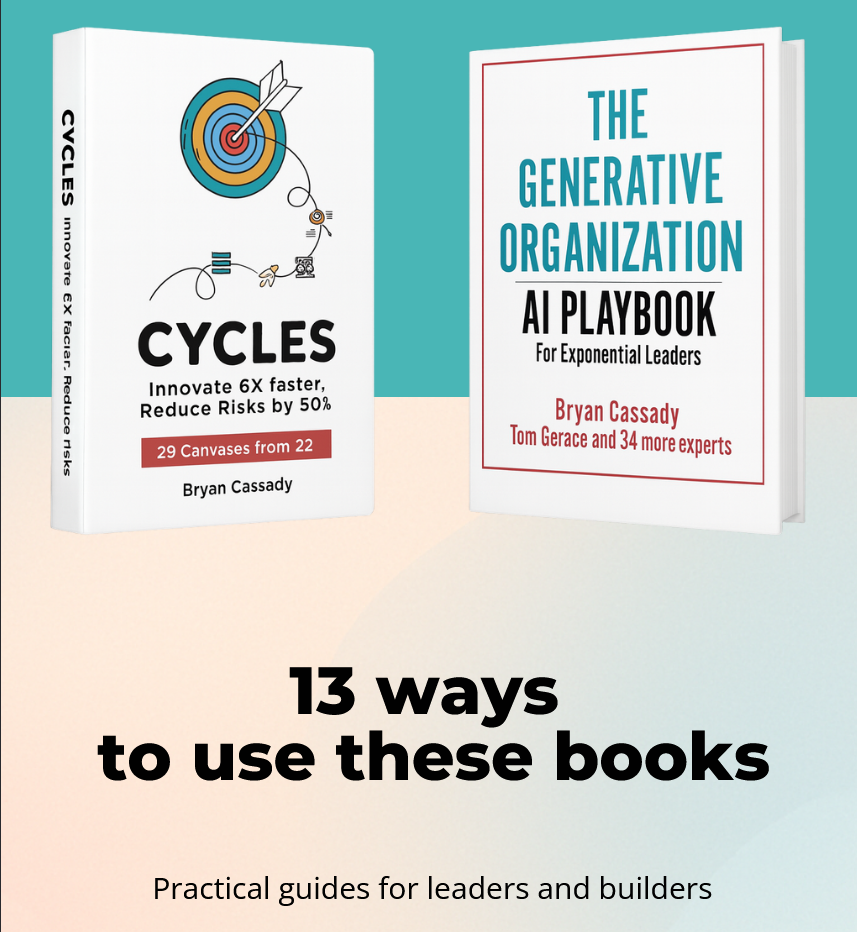
Media Kit
Full media kit including photos and graphics
Link : https://shares.showellapp.com/9Y9dgtYe96JL8GhsZjRwWaXb/e
More Details
Author website: https://www.bryancassady.com
Free access to award-winning books:
CYCLES and The Generative Organization
Link: https://books.genorg.ai/
Frequently asked questions
What is the “1% problem” with business books?
Even successful business books typically lead to meaningful, sustained application by only about 1 percent of readers. Most ideas are read or discussed but never used in real decisions or workflows.
Where does the 1 percent figure come from?
A business book selling around 15,000 copies is considered a strong success. Observed usage patterns show that only a small fraction of those readers apply the ideas in practice. According to Bryan Cassady, the biggest drop-off happens at use, not purchase or reading.
Why don’t business books get used?
They are designed for linear reading. Modern work is fragmented, collaborative, and time-constrained. Books assume uninterrupted focus and memory retention. Work rarely provides either.
Is this an attention span problem?
No. Most readers understand and agree with the ideas. The failure happens when they try to apply them inside real constraints. This is a design mismatch, not a motivation gap.
How does AI change the role of a business book?
AI turns books into queryable systems. Readers extract relevant ideas, test them against constraints, and generate plans during actual work. The book becomes a reference and decision tool, not a narrative to finish.
What is an AI-augmented business book?
It is a book designed to work with AI tools. Its content can be queried, recombined, and translated into concrete outputs like plans, checklists, or decisions instead of relying on memory alone.
Why offer business books for free?
When distribution costs approach zero, value shifts to application. Free access removes friction. Strong ideas spread faster because usage is visible. Weak ideas collapse quickly.
What is the core choice facing business books now?
Optimize to be read, or design to be used. AI makes the difference measurable and impossible to ignore.

Bryan Cassady
+32 475 86 07 57
bryanc@bryancassady.com
© 2025. bryancassady.com. All rights reserved.
Meet with Bryan for a 1-1:
Bryan Cassady is an AI keynote speaker, author of CYCLES, and founder of GenOrg, helping enterprises turn AI hype into measurable execution.